How many days do you need in Marrakech?
Three days is the sweet spot for most first-time visitors. We can use the first day to understand the Medina, the second for palaces, gardens, and food, and the third for a slower activity or day experience.
With only two days, we should stay near the sights we most want to see and avoid booking a distant excursion. With four or more days, Marrakech works well as a base for a day trip or as the opening city of a longer Morocco itinerary.
Best time to visit Marrakech
Marrakech is a year-round destination, but the experience changes considerably with the season. Spring and autumn are often comfortable for long walks, while summer requires more deliberate pacing around the hottest part of the day.
Winter can bring pleasant daytime sightseeing conditions and cooler evenings. We should pack layers rather than assume that a warm afternoon means every part of the day will feel warm.
Before publishing or booking, verify current weather expectations, attraction schedules, religious-calendar considerations, and any seasonal changes to tours or transport.
Where to stay in Marrakech
Choosing the right area matters more than choosing the most impressive-looking room. Marrakech accommodation can place us inside the pedestrian Medina, in a modern neighborhood with easier vehicle access, or outside the center where space and resort facilities become the priority.
Medina: best for atmosphere and first-time sightseeing
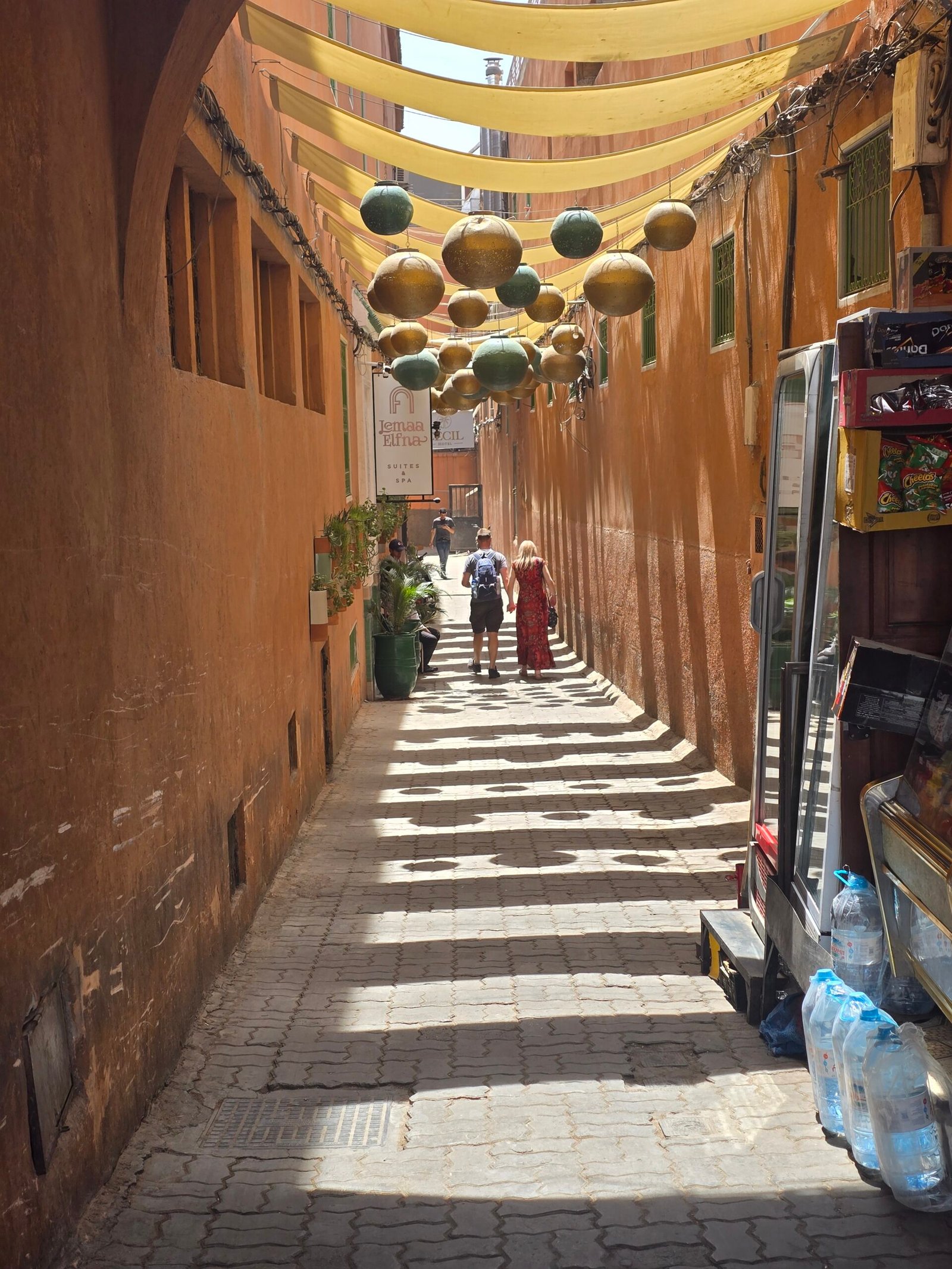
The Medina puts us close to souks, historic buildings, food stalls, rooftops, and many of Marrakech’s most memorable walks. A traditional riad can make the stay feel personal, but narrow lanes, steps, luggage handling, and vehicle restrictions are practical issues to check before booking.
Read recent reviews for comments about the exact access route, evening noise, air conditioning, breakfast timing, and whether staff can meet us at a nearby drop-off point.
Check Rates and Availability on Booking.com
Gueliz: best for modern convenience
Gueliz suits travelers who prefer broader streets, contemporary restaurants, cafés, and a more familiar urban layout. It is a useful choice for visitors who want easier taxi access or who do not want every evening to involve navigating the Medina.
The trade-off is that we may spend more time traveling to the souks and historic sights. Compare the total daily transport time with the atmosphere we want from the trip.
Check Rates and Availability on Booking.com
Hivernage: best for an upscale city stay
Hivernage is worth considering when we want a polished hotel environment, larger facilities, and a location between central attractions and modern Marrakech. It can work particularly well for couples, business travelers, and visitors who value hotel services over a traditional riad layout.
Check Rates and Availability on Booking.com
Palmeraie and outer Marrakech: best for space and resort facilities
The Palmeraie and areas farther from the center can suit travelers looking for pools, gardens, larger rooms, or a resort-style stay. We should treat them as a deliberate choice rather than assume they are convenient for daily Medina sightseeing.
Check whether the property includes transport, how long transfers usually take at the times we plan to travel, and what is available on-site after dark.
Check Rates and Availability on Booking.com
For a closer accommodation comparison, see Best Traditional Riads in Marrakech Medina.
Best things to do in Marrakech
Marrakech rewards curiosity more than speed. We get a better trip by grouping nearby sights, leaving space for unexpected food stops, and accepting that the Medina is an experience in itself rather than just a route between attractions.
Explore the Medina and souks
The Medina is where we notice the changing rhythm of Marrakech: workshops opening, shopkeepers arranging goods, deliveries moving through narrow lanes, and cafés filling as the day cools. Go with a short list of areas or products we genuinely want to explore rather than trying to see every lane.
Wear comfortable shoes, keep valuables secure, and ask before photographing people or private-looking workspaces. A guided walk can help us understand the layout and context during the first visit.
Reserve Your Spot on Viator
Visit the palaces and historic sights
Bahia Palace, El Badi Palace, and the Saadian Tombs offer very different experiences of Marrakech’s history and architecture. We should check current opening information and allow extra time for queues or busy periods.
Rather than rushing through all three, choose the sights that best match our interest in decoration, ruins, dynastic history, or photography.
Reserve Your Spot on Viator
Spend time in a garden
Majorelle Garden is a popular stop, so current entry procedures and timed-access requirements should be checked before we go. It works best as part of a half-day plan that also leaves time for lunch or a quieter neighborhood walk.
Gardens are especially useful when we need a break from the sensory intensity of the souks. Visit earlier or later in the day if the schedule and current access rules allow.
Find Activities on GetYourGuide
Eat on a rooftop or join a cooking experience
Food is one of the easiest ways to make the trip more personal. We can compare a traditional meal, a market-focused food walk, a cooking class, and a rooftop dinner instead of treating every meal as the same type of experience.
For dietary needs, explain restrictions clearly before ordering and confirm ingredients when a dish may contain nuts, dairy, wheat, or meat. A cooking class can be a strong choice for travelers who want context as well as a meal.
Reserve Your Spot on Viator
Experience a hammam
A hammam can be relaxing after several days of walking, but the experience varies from simple local bathing traditions to more polished spa treatments. Check what is included, whether the setting is private or communal, the treatment length, and the cancellation terms before booking.
Find Activities on GetYourGuide
Best Marrakech tours and day trips
The right excursion depends on how much time we have and whether we want scenery, culture, physical activity, or a change of pace.
- Atlas Mountains: A good fit for mountain scenery, village visits, walking, and a cooler change from the city. Check the walking level and transport time.
- Agafay Desert: Useful when we want a desert-style landscape without committing several days to the Sahara. Confirm exactly what the experience includes and how much time is spent traveling.
- Essaouira: A coastal option for travelers interested in the ocean, harbor, seafood, art, and a slower atmosphere. Decide whether a day trip will feel rushed before booking.
- Ouzoud Falls: A longer excursion that may suit travelers who prioritize the waterfall experience and are comfortable with a substantial day on the road.
- Sahara Desert: The Sahara is not a sensible rushed day trip from Marrakech. Plan a multi-day route and compare travel time, overnight arrangements, camp style, and what is included.
Compare these options in Best Marrakech Tours and Day Trips and use Best Sahara Desert Tours from Marrakech if the Sahara is the main reason for adding a desert route.
Reserve Your Spot on Viator
How to get around Marrakech
Walking is usually the most useful way to explore the central Medina, but the distance between neighborhoods makes taxis or arranged transfers practical. Inside narrow pedestrian lanes, we may need to walk the final section with luggage.
For taxis, confirm the fare method and destination before setting off, and allow extra time during busy periods. For organized tours, confirm the meeting point, pickup area, vehicle details, and what happens if the accommodation is inside a restricted-access lane.
What to eat and drink
Build meals around variety: a slow breakfast, a market snack, a sit-down Moroccan meal, and one planned food experience. Common dishes and ingredients can vary by restaurant, so we should ask questions when we have allergies or dietary restrictions.
Mint tea is part of many social and hospitality moments, while fresh juices and café drinks are easy additions to a sightseeing day. Drink water regularly, especially during hotter months and after long walks.
For practical food planning, connect this guide to Fes Food Guide and Best Moroccan Food Experiences when those pages are live.
Cultural etiquette and practical safety
Dress with the setting in mind, especially when visiting religious or traditional spaces. Clothing that covers the shoulders and knees is a useful default for many sightseeing situations, while activity-specific requirements should be checked locally.
Ask before taking close-up photographs of people, workers, performers, or private spaces. Bargaining is common in some shopping settings, but it should remain respectful and we should be willing to walk away without treating the interaction as a confrontation.
Keep phones and wallets secure in crowded areas, use official or clearly identified transport arrangements, and save the accommodation address in a form we can show to a driver. Read Morocco Travel Etiquette for the broader cultural guide.
A realistic 2-day Marrakech itinerary
Day 1: Medina orientation and historic Marrakech
Start with a guided or self-guided orientation through the Medina, then visit one or two historic sights rather than stacking too many attractions together. Leave time for a rooftop pause, an early dinner, or a short return to the accommodation before the evening becomes busier.
Reserve Your Spot on Viator
Day 2: Garden, food, and a slower afternoon
Use the second day for a garden or museum, then choose a cooking class, hammam, food walk, or relaxed neighborhood plan. If we have an evening departure, confirm luggage storage and airport transfer timing before committing to a distant activity.
Check Rates and Availability on Booking.com
A realistic 3-day Marrakech itinerary
Day 1: Arrive and learn the layout
Keep arrival day light. Check in, learn the route between the accommodation and a recognizable landmark, and use a short Medina walk to become comfortable with the surroundings.
Day 2: Palaces, souks, and a planned meal
Group the southern Medina sights together, then return to the souks or book a food experience. A planned dinner gives the day a clear finish without requiring us to improvise when tired.
Day 3: Choose one signature experience
Choose between a garden visit, cooking class, hammam, Atlas Mountains outing, Agafay experience, or another activity. Do not book more than the day can comfortably hold; Marrakech is better when we leave space for the unexpected.
Find Activities on GetYourGuide
How to adapt Marrakech to your travel style
| Travel style | Planning approach |
|---|
| Budget | Choose well-reviewed access and location over decorative extras, group activities over private ones, and a realistic number of paid sights. |
| Standard | Combine a comfortable riad or hotel with one guided experience and one special meal. |
| Luxury | Prioritize location, service, private transfers, flexible pacing, and curated food or wellness experiences. |
| Families | Plan shorter sightseeing blocks, confirm room layout and transfer logistics, and keep one low-effort activity each day. |
| Solo travelers | Use a guided orientation early, choose accommodation with clear access, and share your daily plan with someone at home. |
What to book before arriving
Book accommodation first, especially when we want a particular Medina location or a room suitable for families. Next, arrange the airport transfer if we arrive late, carry substantial luggage, or are staying inside a lane that vehicles cannot reach.
Reserve limited-capacity gardens, cooking classes, popular tours, and special meals when our dates are fixed. Leave the rest flexible enough to respond to weather, energy levels, and local recommendations.
Use Marrakech Airport to Medina and Marrakech Packing List before finalizing arrival plans.
Frequently asked questions
Is Marrakech good for a first trip to Morocco?
Yes, especially for travelers who want a concentrated introduction to Moroccan architecture, markets, food, gardens, and guided experiences. We should plan the first day gently because the Medina can feel intense until we understand its rhythm.
Is two days enough in Marrakech?
Two full days can cover the main historic areas, a food experience, and one garden or museum. Three days gives us a more comfortable pace and makes a day experience possible.
Should we stay in the Medina or outside it?
Stay in the Medina if atmosphere and walkable sightseeing are the priority. Choose Gueliz, Hivernage, or an outer area if easier vehicle access, modern facilities, space, or a quieter environment matter more.
Do we need a guide in Marrakech?
We can explore independently, but a guide is particularly useful for a first Medina orientation, food context, craft knowledge, and navigating a busy historic area. Check the guide’s route, group size, inclusions, and meeting point before booking.
Can we visit the Sahara from Marrakech in one day?
We do not recommend treating the Sahara as a one-day excursion from Marrakech. A multi-day route is more realistic because the distance and overnight logistics are a major part of the experience.
What should we wear in Marrakech?
Choose comfortable, breathable clothing that covers the shoulders and knees when appropriate, plus secure walking shoes and layers for cooler evenings. Pack according to the season and any mountain or desert activities on the itinerary.
The Bottom Line
Marrakech works best when we combine a clear plan with room to slow down. Stay in the area that matches our priorities, group nearby sights, book the few experiences that matter most, and treat transport and cultural etiquette as part of the itinerary rather than afterthoughts.
Start by comparing accommodation, then build a two- or three-day route around our energy level and interests.